Maistro / Case study
Product designLatest work
Product designMaistro: AI agent platform
LinkedInMaistro / Case study
Product designLatest work
Brief / Problem
Maistro was built for a group of agencies working in content, research, marketing and client delivery. Teams across the group wanted to use AI in their client work, but each brand was solving the same problems alone: which models to use, where prompts and knowledge should live, and how to keep one client's information away from another's. A prompt that worked well for one person had no easy way to become a tool the rest of the team could rely on.
Maistro already existed as an internal platform, but it had grown one feature at a time. Technical users could get a lot from it. The writers, researchers and account teams who stood to gain most found it hard to approach.
Brief / Objective
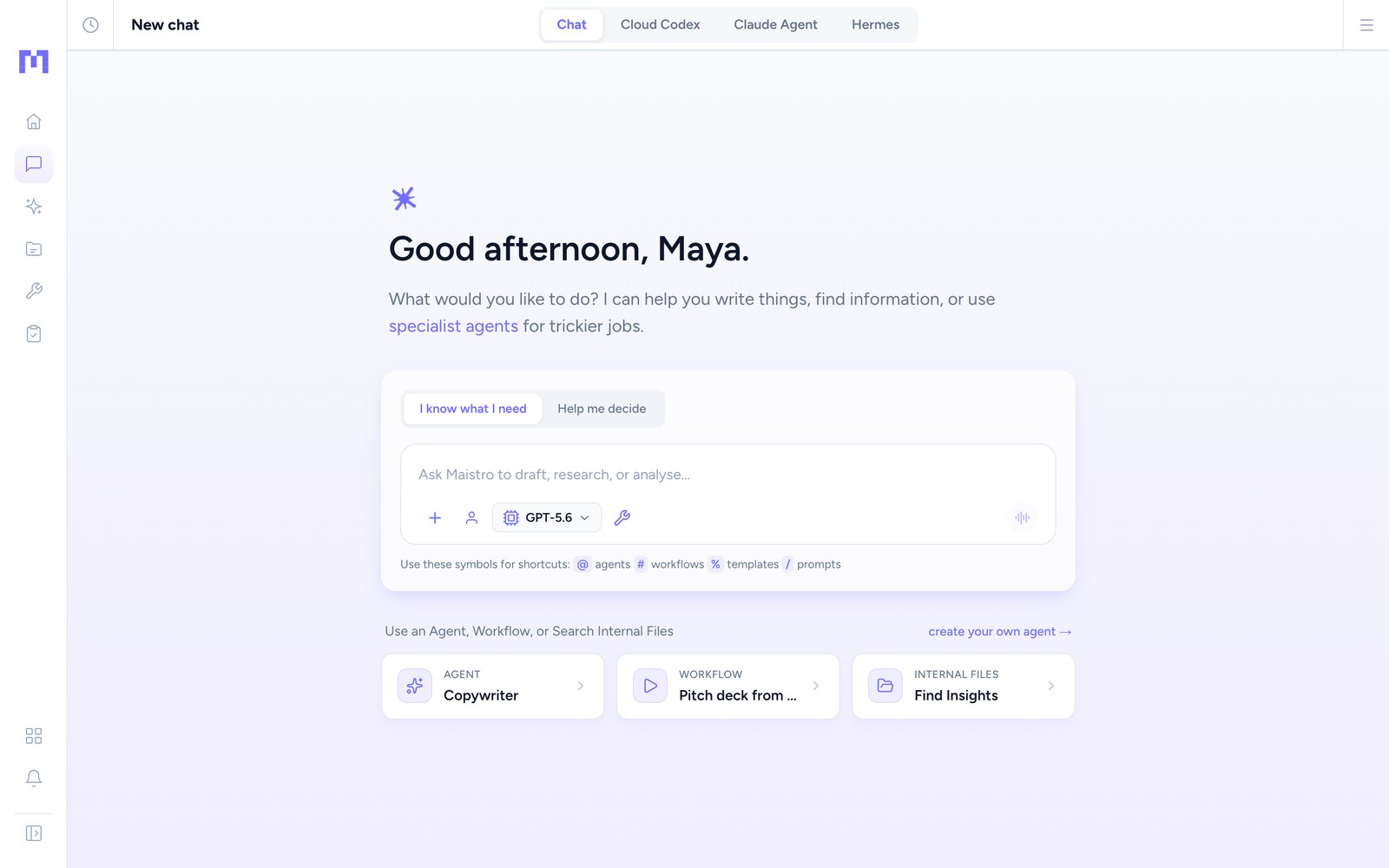
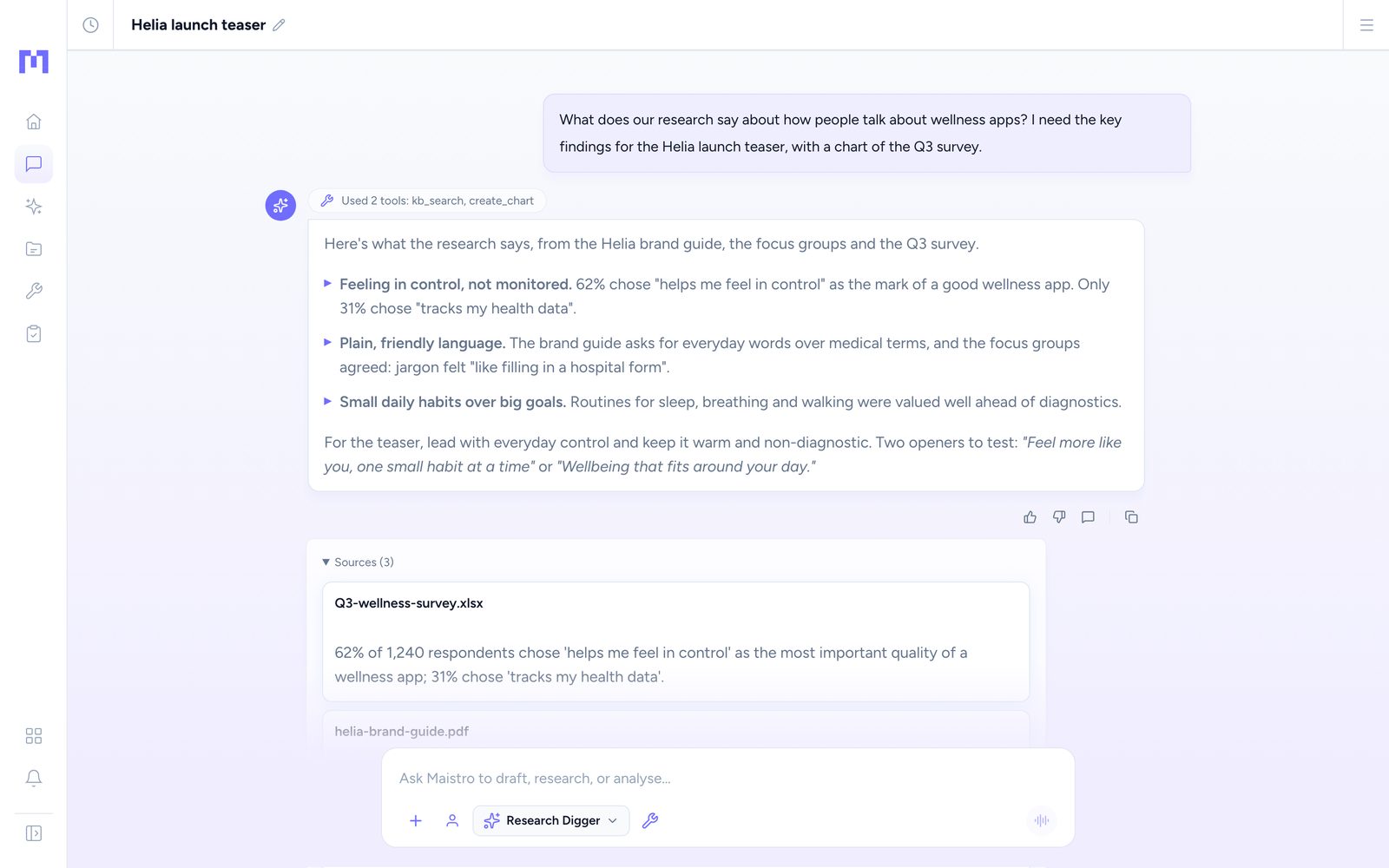
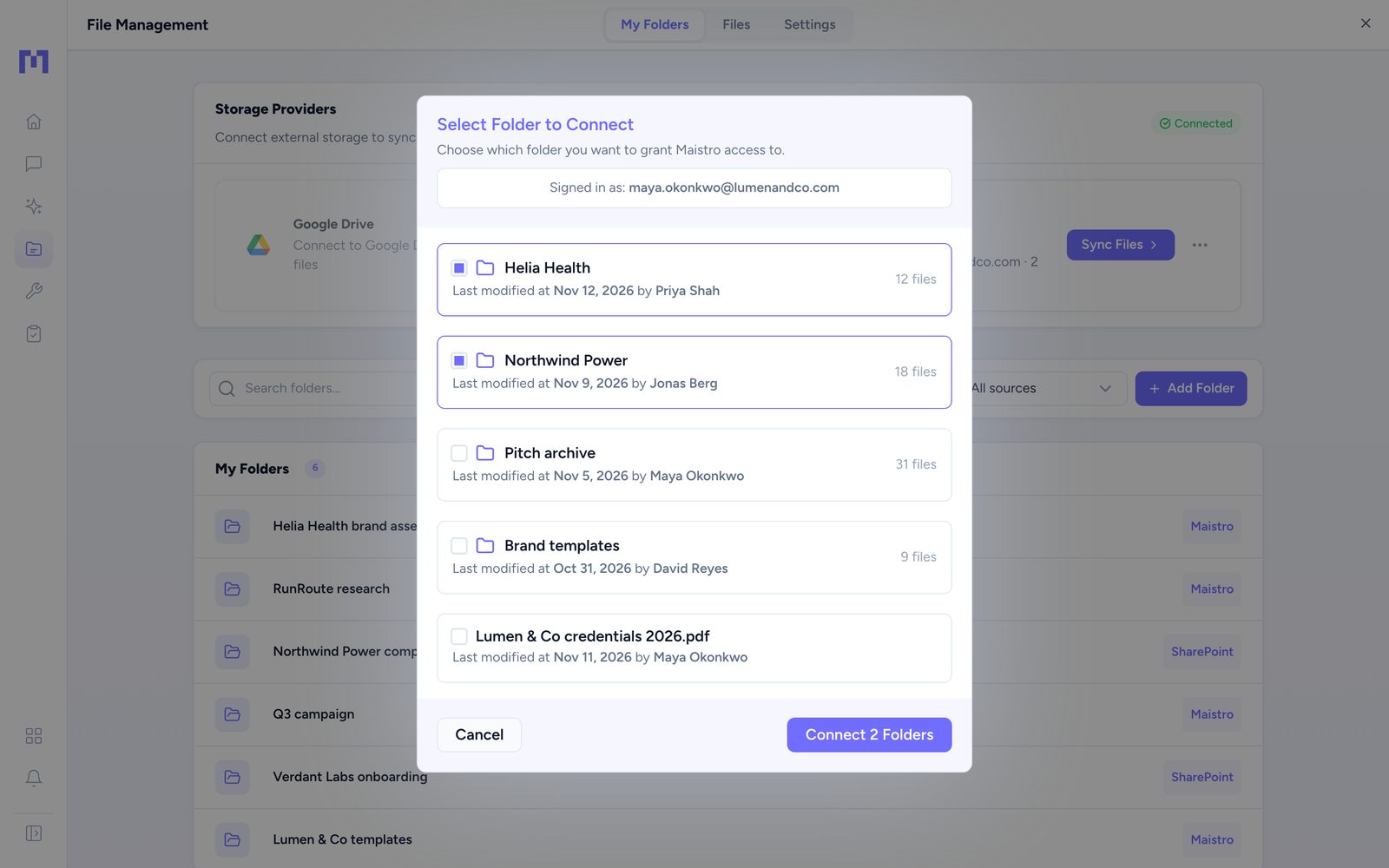
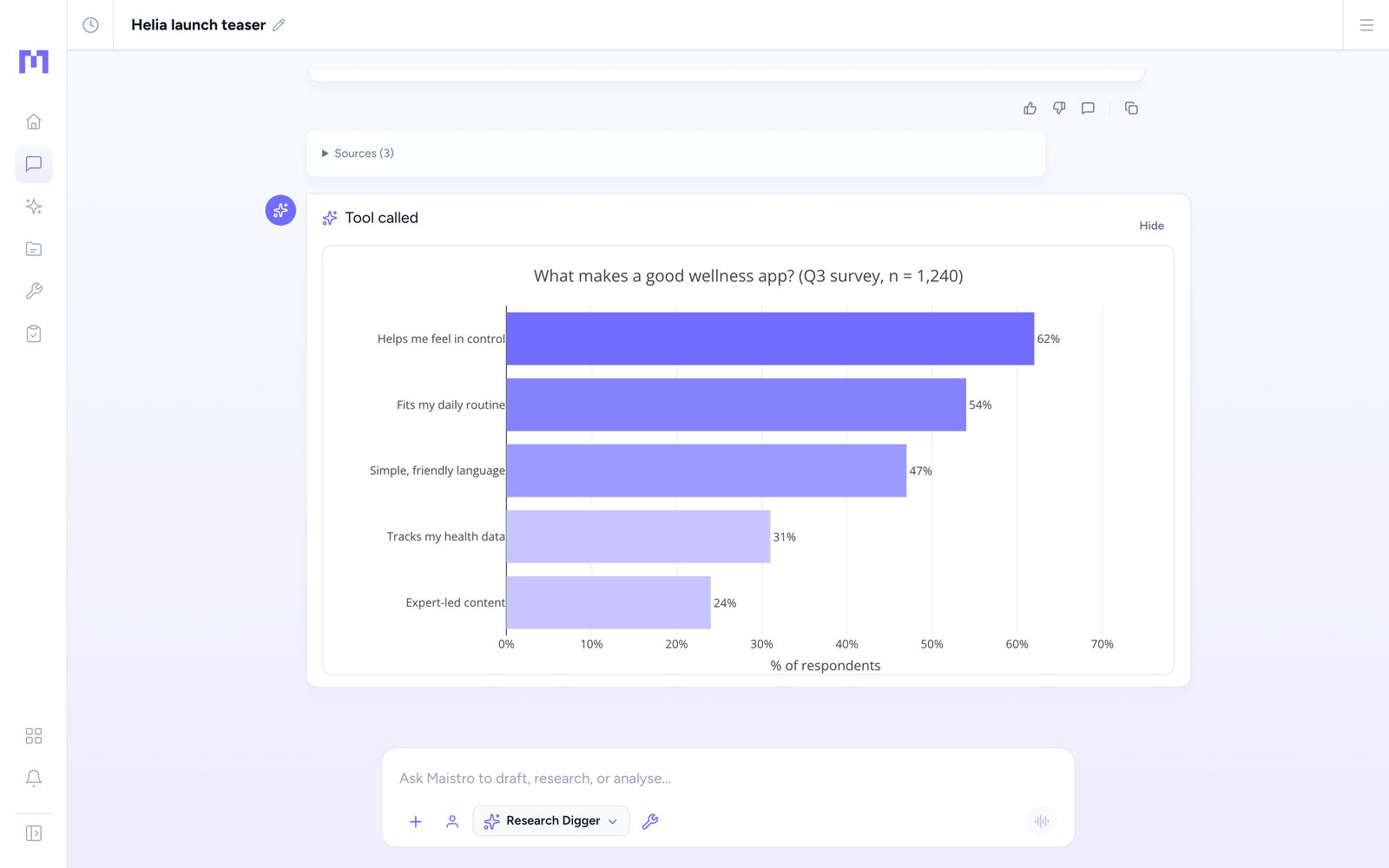
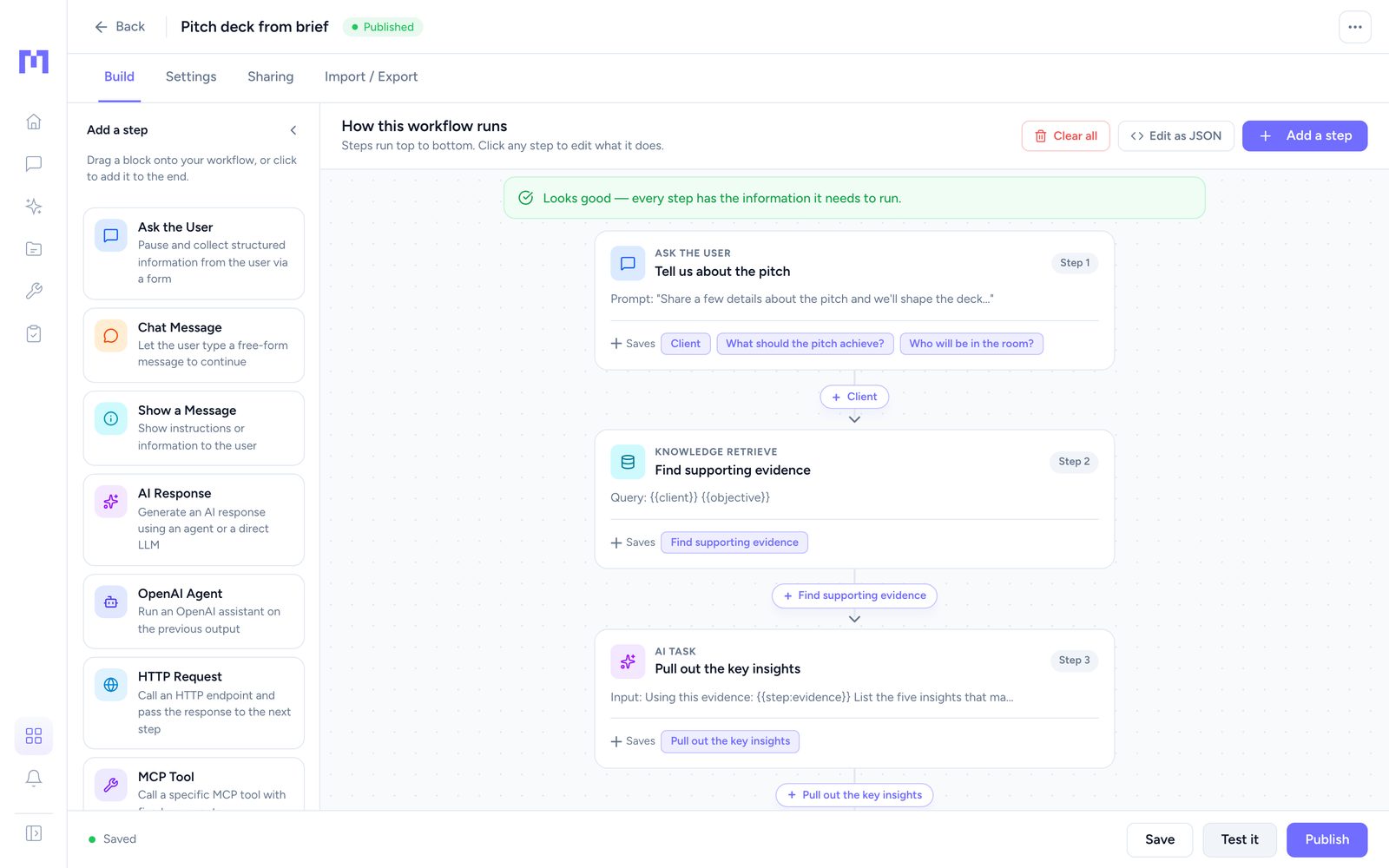
We set out to make Maistro the one place where anyone in the group could get AI work done safely. People needed to chat with the right model, find or build an agent for a task, chain agents into workflows, and use their brand's files and client knowledge without leaving the conversation.
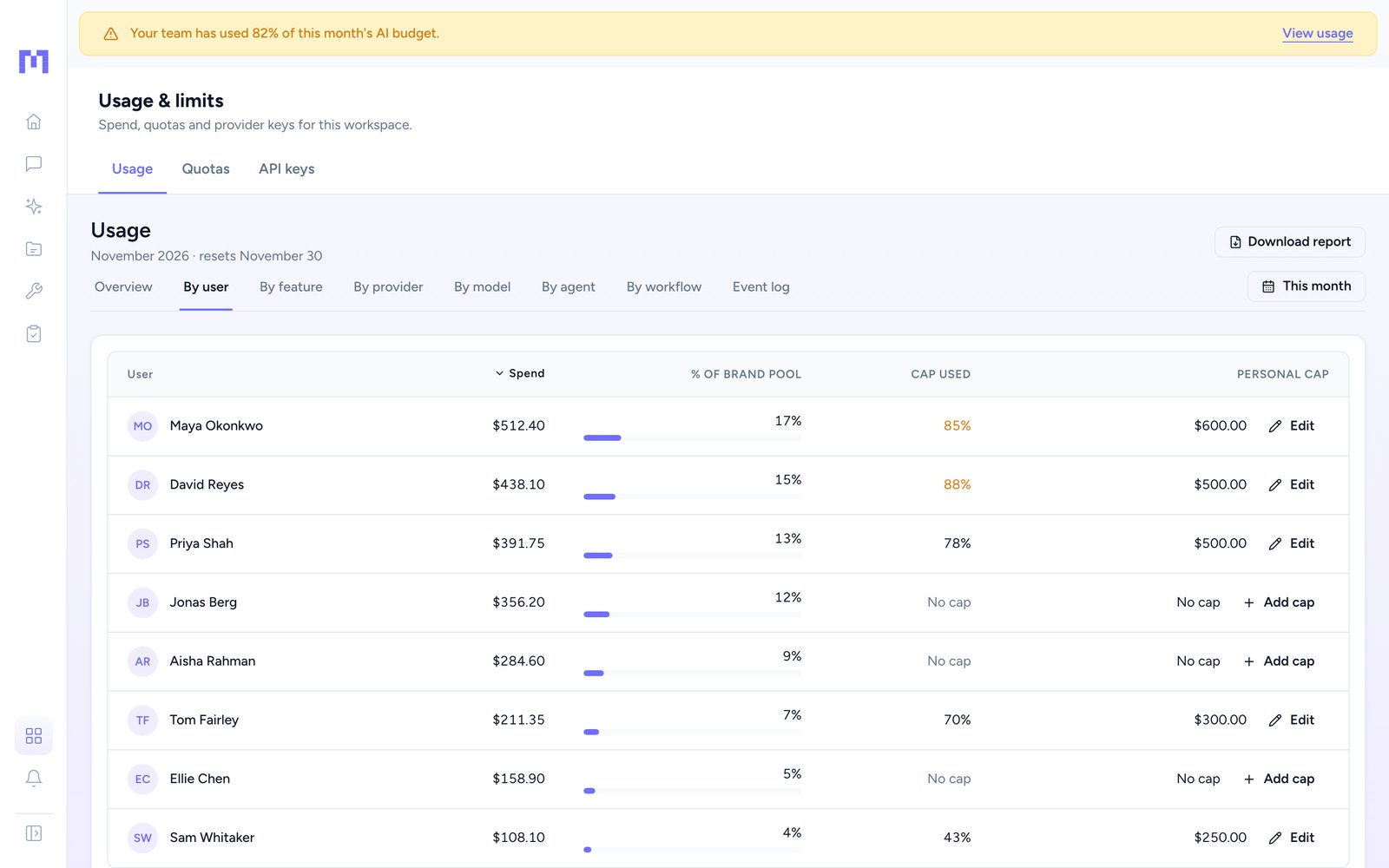
The product had to serve very different people at once: staff who just want an answer, builders who create agents for their teams, and admins who manage users, access and spend. Every brand also needed firm boundaries around its data, so the design had to make privacy and cost visible without turning them into obstacles.
Process / Discovery
We worked with stakeholders and teams across the brands to understand how they already used AI day to day. The product itself also became a research channel. An in-product Product Hub let staff submit and vote on ideas, analytics and feedback on individual replies showed where people dropped off, and testers reviewed each release before it shipped. A full audit of the live product led to 44 fixes across accessibility, performance and security.
Process / Ideation
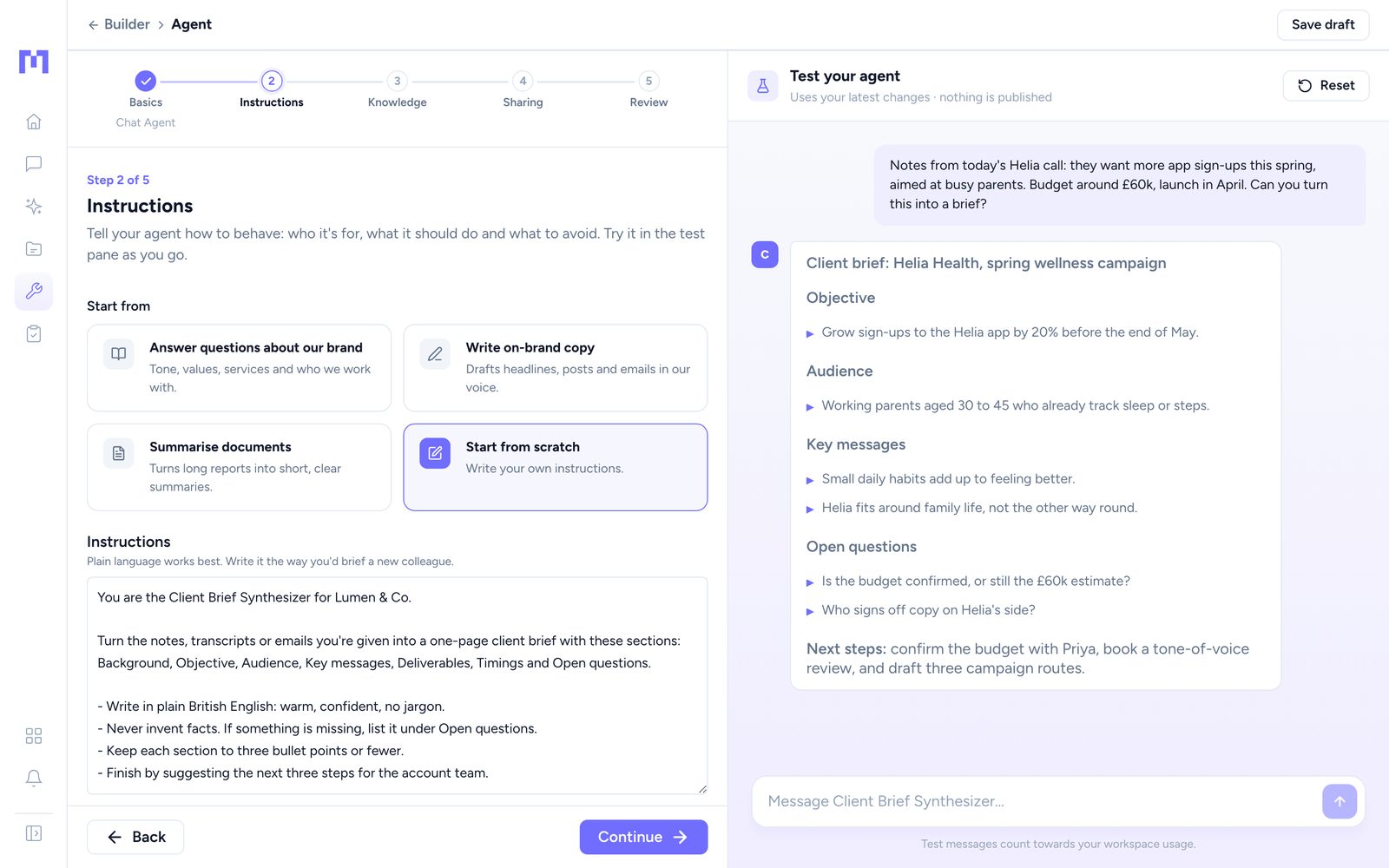
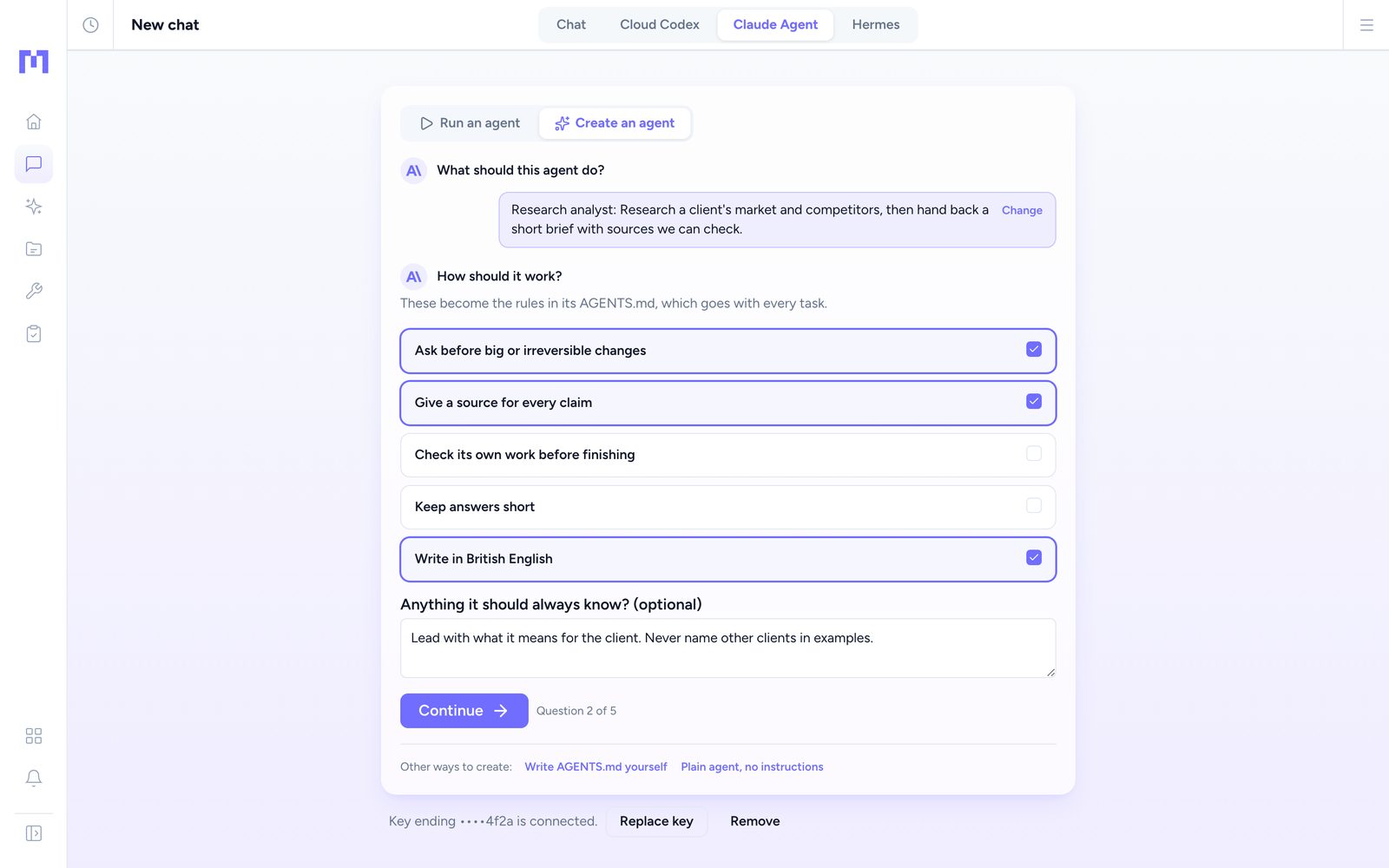
Each feature followed the same path: a short brief, a plan setting out the key decisions for sign-off, a clickable prototype built on the real design tokens in light and dark themes, then the production build. For guided agent creation, we explored five directions and three variations. We chose a conversational setup: a handful of questions write the agent's instructions, and the new agent then introduces itself with suggested first tasks.
Alongside the features, we built the design system the whole product runs on: one set of tokens, a shared component library, and a rule to reuse an existing pattern before inventing a new one. With that in place, the team could move designs through an AI-assisted pipeline, from opportunity brief to requirements, artboards and code, without the interface drifting.
Result / Outcome
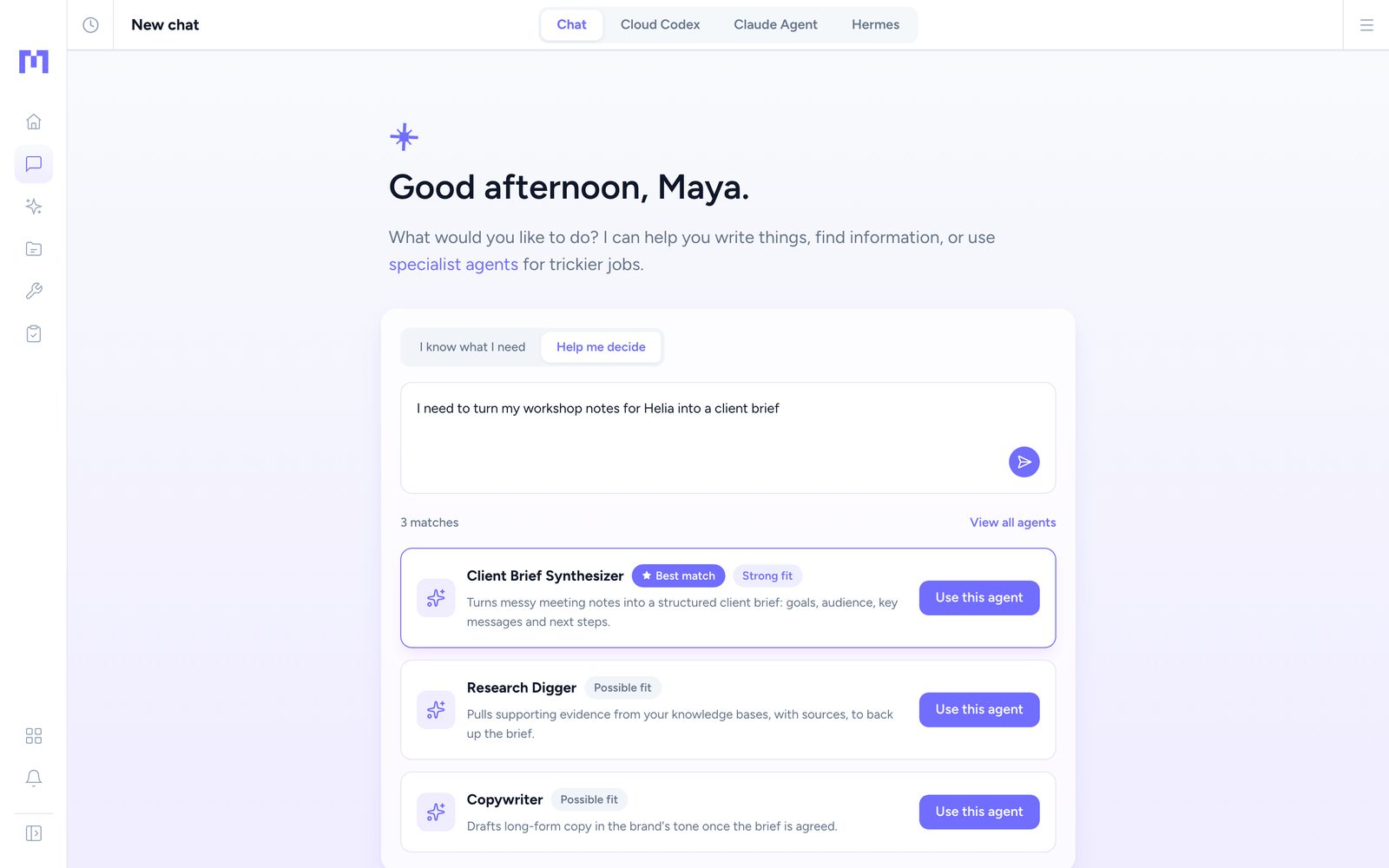
Maistro became the shared AI platform across the group. Getting from a question to the right tool now takes one step. People describe what they need, and Help me decide suggests up to three matching agents, or lets them request one when nothing fits. The redesigned builder puts building and testing side by side. People without a technical background can shape an agent, try it out and share it with their team in one sitting.
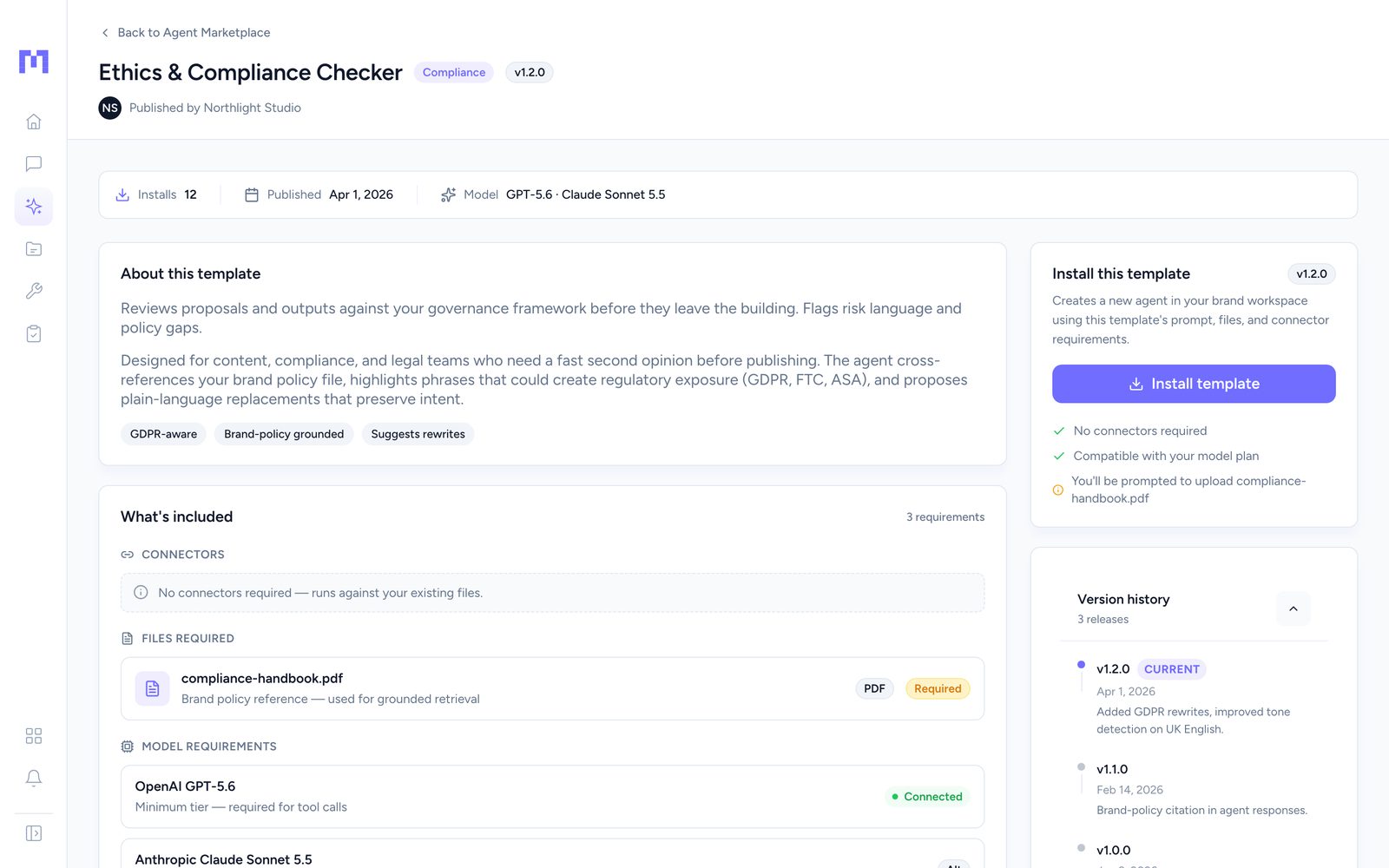
Agents can now move between brands. One brand can publish an agent to the marketplace, and another can install it with its own files and connectors. For admins, usage dashboards, quotas and output approvals made AI spend and quality something they can see and act on.
The design system gave a small team one consistent product across more than a dozen areas, from chat and workflows to files, analytics and an in-product academy.